
A new launch date of December 5th for the USSF‘s STP-3 mission has had to be set by United Launch Alliance, due to inclement weather that occurred during the launch vehicle processing.

A United Launch Alliance (ULA) Atlas V 551 rocket had expected to launch the Space Test Program-3 (STP-3) mission for the U.S. Space Force’s (USSF) Space Systems Command (SSC) on November 9, 2021. That launch is now postponed due to a space vehicle processing issue. The new scheduled launch date is December 4, 2021.
STP-3 is a co-manifested mission that matures technology and reduces future space program risk for the Department of the Air Force and the U.S. Space Force by advancing warfighting capabilities in the areas of nuclear detonation detection, space domain awareness (SDA), weather, and communication.

Both spacecraft will be delivered to geosynchronous orbit. Liftoff will occur from Space Launch Complex-41 at Cape Canaveral Space Force Station, Florida.
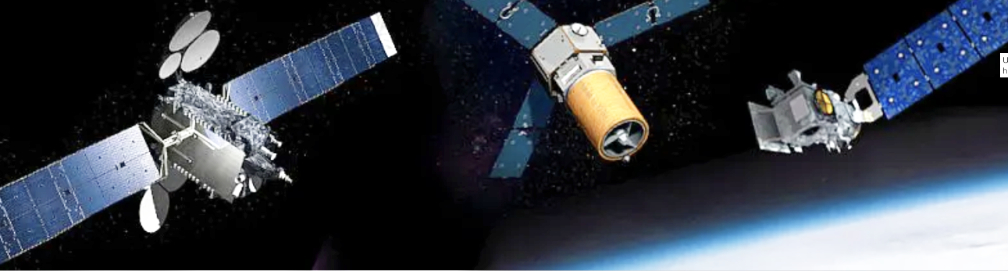
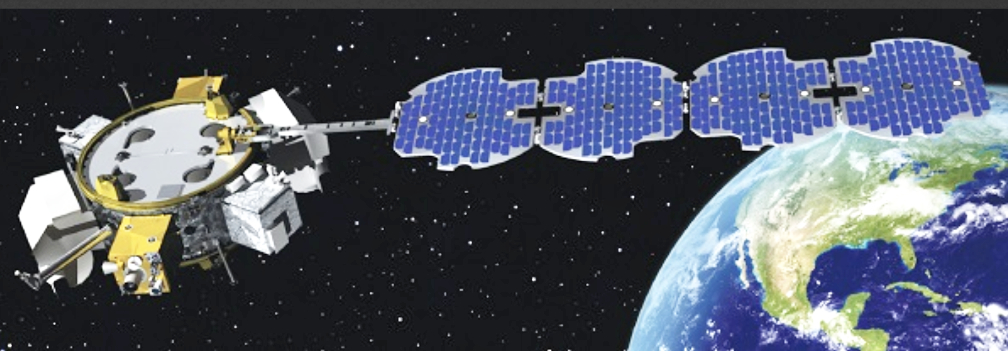
The primary spacecraft is STP Satellite (STPSat)-6 and the rideshare spacecraft is the Long Duration Propulsive Evolved Expendable Launch Vehicle (EELV) Secondary Payload Adapter (ESPA) (LDPE) – 1. STPSat-6 is a multipurpose spacecraft carrying nine payloads and experiments. Both spacecraft were built by Northrop Grumman. The instrument suite includes the Space Atmospheric Burst Recording System-3 (SABRS-3), an operational mission from the National Nuclear Security Administration, NASA’s Laser Communication Relay Demonstration (LCRD) payload to test technologies for the next generation of data relay satellites, and seven Defense Department Space Experiments Review Board space weather and situational awareness payloads.
The STP-3 mission debuts three engineering features designed to reduce risk and accumulate flight experience before use on the Vulcan Centaur, these include Out-of-Autoclave (OoA) payload fairings, an in-flight power system and GPS enhanced navigation.
The OoA payload fairing was developed with a new manufacturing method, an alternative process to cure carbon fiber composites, which allows for a more efficient production process, lower cost and lower system mass while maintaining the same level of reliability and quality.
The Atlas V is also equipped with a new In-Flight Power System (IFPS). This system supplies power to the satellites’ batteries during the rocket’s long duration ascent, a mission more than seven hours. The IFPS will ensure the spacecraft have fully charged batteries when deployed into geosynchronous orbit.
GPS Enhanced Navigation is an additional first flight item that uses existing flight computer hardware to provide GPS signals that improve the Centaur‘s navigation system performance, allowing the Centaur to achieve even more accurate orbits.

Launch Vehicle
The spacecraft is encapsulated in a 17.7-ft (5 m) diameter short payload fairing. The 5 m PLF is a sandwich composite structure made with a vented aluminum-honeycomb core and graphite- epoxy face sheets. The bisector (two-piece shell) PLF encapsulates both the Centaur and the satellite. The vehicle’s height with the 5 m short PLF is approximately 196 ft (59.7 m).
The Centaur second stage is 10 ft (3 m) in diameter and 41.5 ft (12.6 m) in length. Its propellant tanks are pressure-stabilized and constructed of corrosion-resistant stainless steel. Centaur is a cryogenic vehicle, fueled with liquid hydrogen and liquid oxygen, powered by an RL10C-1 engine producing 22,900 lb (101.9 kilo-Newtons) of thrust. The cryogenic tanks are insulated with a combination of helium-purged blankets, radiation shields and spray-on foam insulation (SOFI). The Centaur forward adapter (CFA) provides structural mountings for the fault-tolerant avionics system and structural and electrical interfaces with the spacecraft. Booster
The booster is 12.5 ft (3.8 m) in diameter and 106.5 ft (32.5 m) in length. The booster’s tanks are structurally rigid and constructed of isogrid aluminum barrels, spun-formed aluminum domes and intertank skirts. Booster propulsion is provided by the RD-180 engine system (a single engine with two thrust chambers).
The RD-180 burns RP-1 (Rocket Propellant-1 or highly purified kerosene) and liquid oxygen and delivers 860,200 lb (3.83 mega-Newtons) of thrust at sea level. Five solid rocket boosters (SRBs) generate the additional power required at liftoff, providing 371,550 lb (1.6 mega-Newtons) of thrust. The Centaur avionics system, provides guidance, flight control and vehicle sequencing functions during the booster and Centaur phases of flight.