
On July 27, 2021, iRocket announced that the company signed a Space Act Agreement with NASA Marshall Space Flight Center in Huntsville, Alabama.
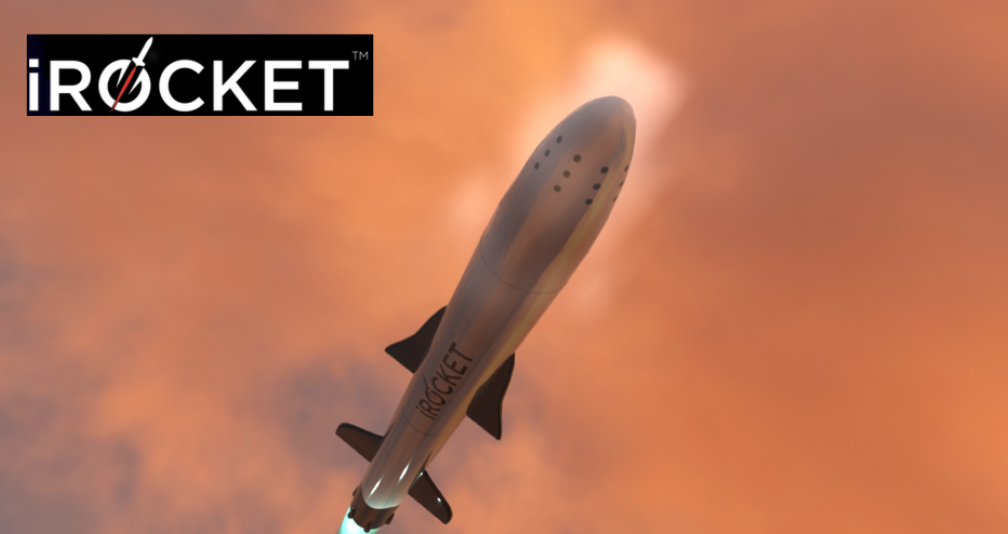
iRocket is a New York startup building autonomous reusable rockets to cargo smallsat constellations to LEO via the company’s Shockwave launch vehicle. iRocket develops cost-effective launch vehicles that can support 300 and 1500 kg payloads for satellite constellation providers for national security satellites, 5G internet constellations, the Internet of Things (IoT), biotech research, and space exploration.

Under this agreement, NASA will help to accelerate iRocket’s next-gen reusable engine development by providing testing and engineering support of up to $50 million over five years. iRocket will significantly reduce launch costs against competitors, such as SpaceX, and rapidly deploy smallsats to LEO orbit with the first launch planned for 2023.
iRocket recently graduated from the NYU Endless Frontiers Lab 2020-2021 Deep Tech cohort and is scheduled to close its next funding round on August 13th, 2021.
iRocket is currently supporting the U.S. Space Force (USSF) and Space & Missile Systems Center (SMC) on a Phase II rapid prototype development contract for the firm’s reusable launch vehicles, with plans to scale up to Shockwave V to deliver cargo anywhere around the world in under an hour, fully supporting logistics carriers, national security cargoes and humanitarian missions. Space Force’s first Rocket Cargo project studies possibilities of rapid launches and delivery of material and even personnel across the globe.
Blue Origin’s reusable New Shepard launch vehicle recently successfully performed its first crewed mission on July 20, another reusability milestone in the space industry. New Shepard demonstrated that more and more companies are starting to realize the significance of reusability in this industry.
iRocket’s Shockwave will be a fully autonomous launch vehicle and the only fully reusable small launcher in the market. The rocket will consist of two stages to orbit, the first and second stage landing back on the launch site. iRocket will prove inland launch capabilities to the Department of Defense and be mission capable of launching within 24 hrs. The company plans to launch all rockets from Launch Complex 48 at Kennedy Space Center in Cape Canaveral, Florida.
“We are excited about this new partnership with NASA Marshall Space Flight Center as iRocket’s innovative reusable engine technology has been under development since 2018 and will be ready for testing in late September,” says iRocket CEO, Asad Malik.