

ST Engineering iDirect has successfully completed their first Over-the-Air (OTA) testing of iDirect’s Multi-Frequency Time Division Multiple Access (MF-TDMA) return link on the Telesat Phase-1 Low Earth Orbit (LEO) satellite.
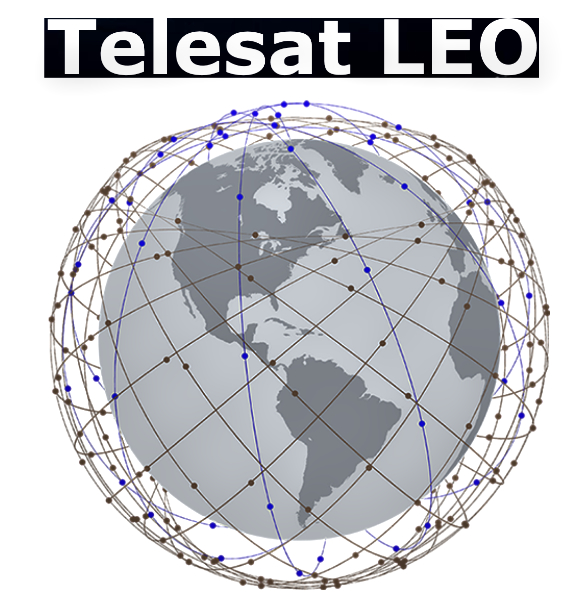
This milestone achievement demonstrated dynamic sharing of bandwidth among multiple terminals within a LEO constellation, a capability that extends the capacity and flexibility of Telesat’s multi-beam beam hopping architecture, and opens up a wide range of use cases for Telesat’s LEO customers in the commercial, government, and defense markets for land, land-mobile, aeronautical, maritime, and other applications.
The testing was conducted at Telesat’s Allan Park facility and featured ST Engineering iDirect’s VSAT platform networked across multiple satellite modems. The iDirect platform was able to compensate fully for the LEO satellite link dynamics, including time, frequency, signal variation and Doppler effects. Short guard times (the time intervals required between radio bursts to prevent self-interference) were achieved, comparable in length to guard times used on GEO satellite links, without compromising capacity or spectral efficiency.
The ability to leverage MF-TDMA to efficiently share bandwidth on satellite ground-to-space links improves the capacity, performance and affordability of broadband services delivered over LEO satellite constellations.
To put the link to the test, the team conducted a video conference with engineers at Allan Park and achieved seamless connectivity, low jitter and low packet loss, resulting in a high Quality of Experience (QoE) that exceeded the level typically achieved over GEO satellite networks.
Executive Comments

“This is a significant success for the ST Engineering iDirect and Telesat teams,” said Bart Van Poucke, VP of Product Management at ST Engineering iDirect. “We have achieved the benefits of MF-TDMA efficiency whilst unlocking the low latency offered by LEO satellites. This demonstration confirms the wide addressable market for LEO and particularly for applications that require mission-critical communications. We are proud to have been part of these tests and thank Telesat for the opportunity.”

“Satellite service providers are eager to take advantage of Telesat LEO’s affordable, low latency, high-speed connectivity to deliver secure Internet, VPN, video conferencing and cloud applications to their customers,” stated Erwin Hudson, Telesat’s VP of LEO. “I congratulate the ST Engineering iDirect engineering team on their successful testing campaign. They demonstrated the powerful advantages that MF-TDMA brings to LEO networks, a capability that can provide increased flexibility and higher capacity for our customers while allowing us to support a greater number of end users on each LEO satellite.”