
The recent arrival of China’s Shenzhou 22 rescue ship at the Tiangong space station is a significant milestone, illustrating a pivotal moment in the nation’s robust and expanding space program.
This event highlights China’s commitment to prioritizing safety and reliability in its independent operation of a permanent human presence in low-Earth orbit. The logistics of maintaining a fully operational space station require meticulous planning, and having a dedicated, ready-to-launch rescue capability is a critical component of ensuring mission success and astronaut safety.
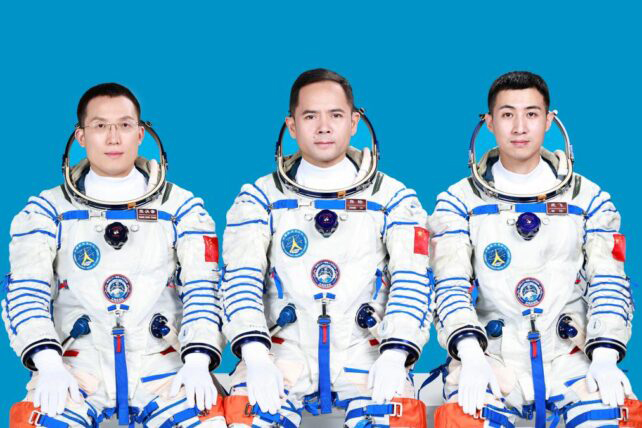
The Strategic Importance of the Shenzhou Program
The Shenzhou spacecraft serves as the backbone of China’s crewed space missions. Developed from the foundational Russian Soyuz design but with significant Chinese modifications and technological advancements, the Shenzhou is a multi-role vehicle capable of transporting taikonauts to and from orbit, serving as a life raft while docked at Tiangong, and facilitating emergency returns to Earth if necessary.
The deployment of a specific vessel configured primarily as a “rescue ship” underscores a crucial operational philosophy: preparedness for the unexpected. While standard crew rotation missions inherently include a docked spacecraft for return, designating a ship specifically for rescue purposes adds an extra layer of redundancy and readiness. This ensures that even during complex operations or unforeseen circumstances, the crew has immediate, specialized access to evacuation hardware.
Enhancing Tiangong’s Operational Resilience
China’s Tiangong space station is its crown jewel in space exploration, a symbol of national technological prowess and a platform for extensive scientific research and international cooperation. To maintain continuous human habitation, systems must be fail-safe. The presence of the Shenzhou 22 rescue ship at the station significantly enhances the overall operational resilience of the orbital outpost.
The rescue ship isn’t just about worst-case scenarios; it is a vital psychological and operational assurance for the taikonauts currently orbiting hundreds of kilometers above Earth. Knowing that dedicated, highly responsive rescue capabilities are pre-positioned is a key factor in mission morale and focus. It allows the crew to concentrate on their scientific duties and station maintenance without the added burden of worrying about emergency logistics. This mission structure is a testament to the meticulous planning by the China Manned Space Agency (CMSA) and its commitment to international space safety standards.
A New Era of Independent Space Operations
Unlike the International Space Station (ISS), which is a collaborative project involving multiple nations and space agencies, the Tiangong station is operated solely by China. This independence means that China is solely responsible for developing, launching, and managing all supporting infrastructure, including logistics, crew transport, and emergency systems.
The successful arrival and docking of the Shenzhou 22 rescue ship demonstrates China’s comprehensive capability to manage all aspects of a sustained human presence in space. This achievement positions China as a leading global space power, capable of complex, independent orbital operations. It showcases the nation’s advanced engineering, reliable launch systems, and sophisticated mission control capabilities.
In the broader context of global space activities, where commercial entities like SpaceX and Boeing are working alongside national agencies such as NASA and ESA, China’s progress highlights the diversity of approaches to space exploration. The professionalism and efficiency of the Shenzhou 22 mission signal China’s long-term strategic vision for space, likely including future missions to the Moon and beyond.
The Shenzhou 22 mission is far more than a routine maneuver; it is a clear declaration of operational maturity and a crucial step in ensuring the safety and longevity of the Tiangong space station, solidifying China’s significant role in the future of human spaceflight.