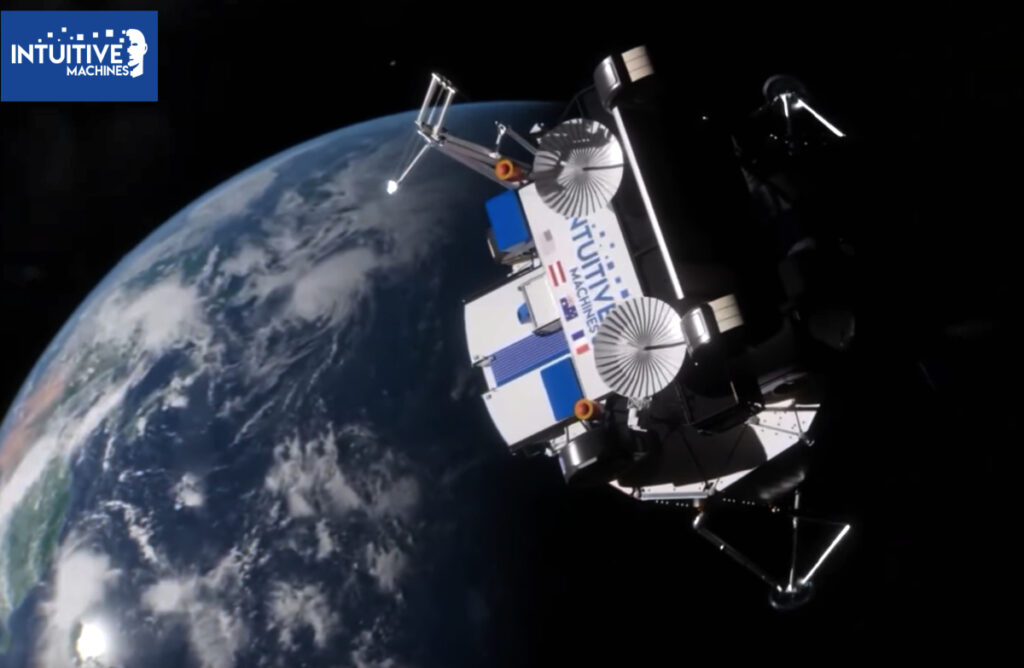
The lunar South Pole has drawn sustained attention from scientists, space agencies, and commercial innovators due to its potential reserves of water ice and its strategic value for long-term exploration. Deep craters remain in permanent shadow, creating cold traps where ice may have accumulated over billions of years and offer a possible source of life support and fuel for future missions. These deposits, if confirmed and accessible, could enable sustained human presence and extended surface operations on the Moon.
With its combination of resource potential and location advantages, the South Pole region has become a focal point for NASA’s Artemis program and other international lunar initiatives. To support this vision of sustained exploration, new technologies are being tested that could overcome the harsh environmental constraints of the region, including how lunar terrain vehicles receive power.
One promising advancement is Star Catcher Industries’ orbital energy grid, which is designed to deliver power on demand to spacecraft and lunar vehicles by collecting sunlight in orbit, converting it into laser-based energy, and beaming it wirelessly to solar panels on the lunar surface.
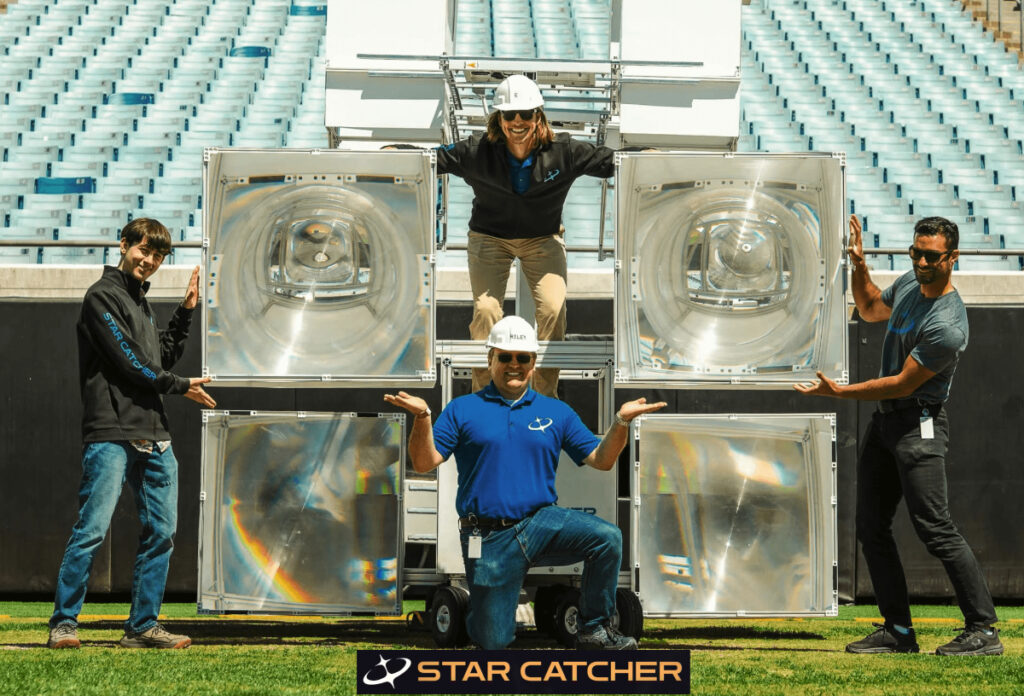
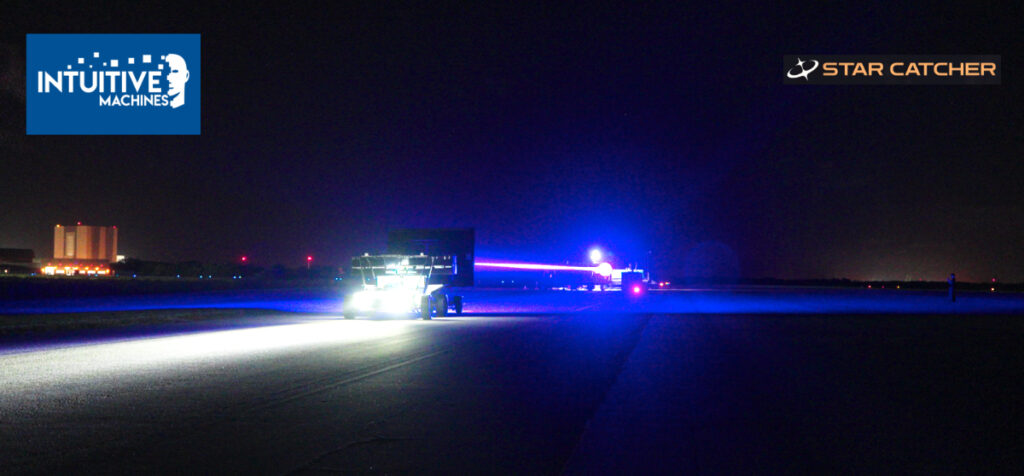
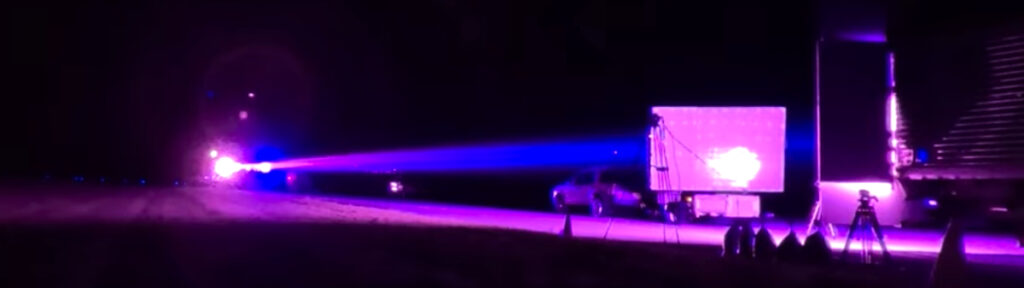
In recent tests at NASA’s Kennedy Space Center, Star Catcher successfully demonstrated how beamed power could support operations in extreme lunar environments by transmitting energy to Intuitive Machines’ Moon RACER Lunar Terrain Vehicle.
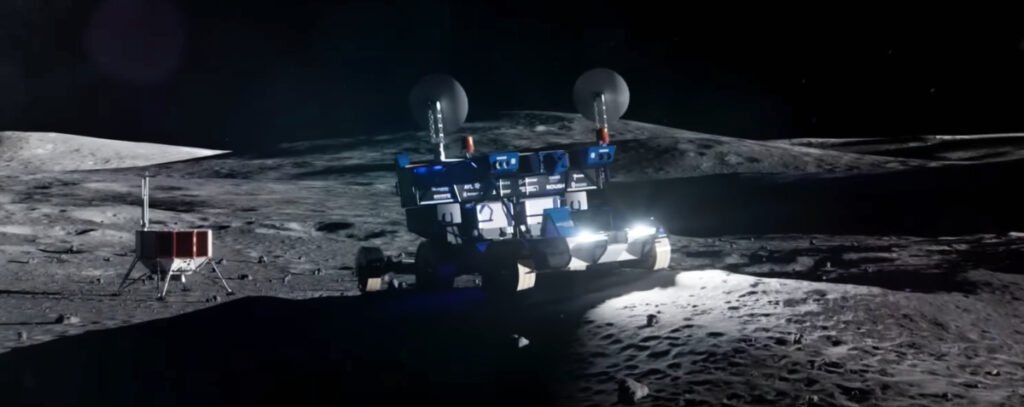
During Star Catcher’s multi-day test campaign, the team surpassed the previous wireless power transmission benchmark set by the U.S. Defense Advanced Research Projects Agency (DARPA) earlier this year and proved that high-efficiency optical beaming can deliver meaningful power levels to standard solar panel without requiring custom receivers.
The results suggest that future missions could receive scalable, on-demand energy without the need for extensive ground infrastructure, dramatically simplifying deployment and extending mission reach.
Traditional power sources such as solar panels and regenerative fuel cells perform reliably in sunlit regions but are poorly suited to shadowed terrain, especially during the 150-hour lunar night. Solar arrays require precise placement, extensive surface area, and complex deployment mechanisms, adding significant mass and setup time to missions.
Regenerative fuel cells, while capable of storing energy for extended periods, involve cryogenic systems and gas storage tanks that further increase weight and operational complexity. Combined, these systems can account for hundreds of kilograms of a vehicle’s total mass and drive up mission costs due to added weigh and engineering overhead.
To address these limitations, scientific, commercial, and industry organizations alike are seeking ways to reduce mission mass, complexity, and duration, enabling operations that previously were out of reach.
One emerging solution to the Moon’s power constraints is optical power beaming, which is a method of wirelessly transmitting concentrated solar energy from lunar orbit to surface vehicles. This approach bypasses the need for labor-intensive and costly ground infrastructure, such as fixed solar farms or buried power lines, which are difficult to deploy in rugged terrain. Instead, it delivers energy directly from orbit and is designed to intelligently support both real-time operations and back-up power needs. By enabling continuous operation in shadowed regions and reducing reliance on bulky onboard systems, optical power beaming offers a path to lighter, more flexible vehicle designs and longer mission durations.
By delivering energy directly from orbit, Star Catcher helps reduce the need for heavy onboard systems and complex ground infrastructure, enabling continuous activity in shadowed regions and through the long lunar night. With its first on-orbit demonstration planned for 2026 and full-scale multi-orbit deployment targeted for 2030, Star Catcher could help reshape how missions are powered, supported, and sustained at the Moon’s South Pole.
The orbital power grid represents the kind of innovative technology that could help power and support the space infrastructure Intuitive Machines is building, including its Space Data Network (SDN) and space delivery services. As missions become more autonomous and distributed across lunar and cislunar space, they require both reliable energy and persistent connectivity.
Optical power beaming enables continuous operations in shadowed regions and throughout the lunar night, while Intuitive Machines’ infrastructure ensures real-time coordination, data delivery, and mission control across surface and orbital assets. Together, these systems form a scalable foundation for extended exploration and commercial activity in space.