

Hermeus has demonstrated turbojet to ramjet transition within their Chimera engine — this is one of the most important technological feats to making operational hypersonic flight a reality.
Chimera is a turbine-based combined cycle engine (TBCC) — which basically means it’s a hybrid between a turbojet and a ramjet. The ability to switch between these two modes allows Hermeus’ first aircraft, Quarterhorse, to take off from a regular runway and then accelerate up to high-Mach speeds. The cost and speed at which the Hermeus team achieved this milestone is notable.
The testing occurred at the Notre Dame Turbomachinery Laboratory which provides heated air to simulate high-Mach temperatures and pressures.
Hermeus designed, built, and tested Chimera in 21 months for $18 million.

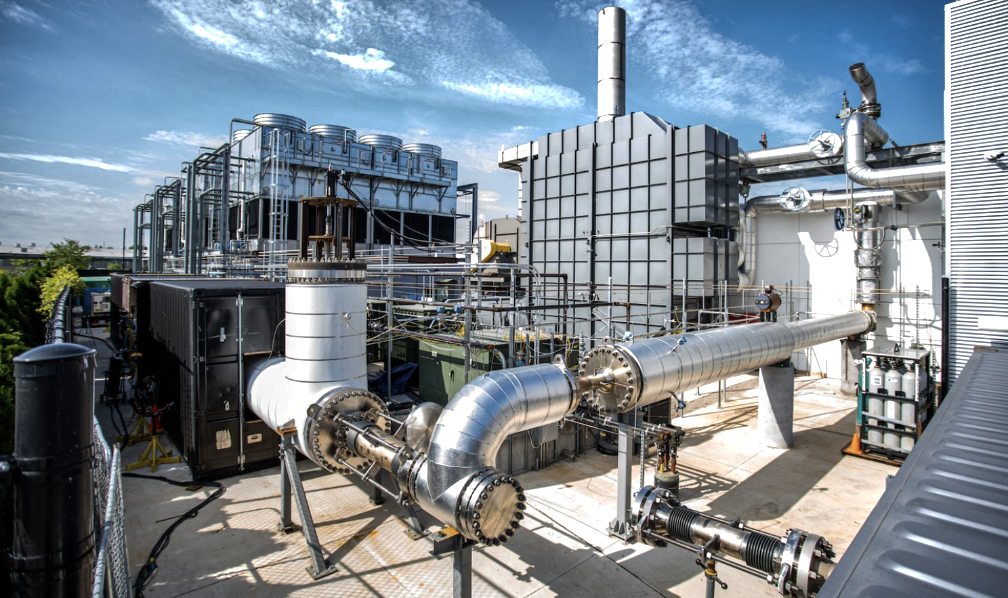
At low speeds Chimera is in turbojet mode — just like any jet aircraft. But as the temperature and the speed of the incoming air increase, turbojets hit their performance limit. This happens at around Mach 2. Chimera has a pre-cooler that reduces the temperature of the air coming into the turbojet. This allows Hermeus to squeeze out a bit more performance from the turbojet before transitioning to ramjet. At around Mach 3, Chimera begins to bypass the incoming air around the turbojet and the ramjet takes over completely.
A ramjet is a simple propulsion system which “rams” the incoming high-pressure air to create compression. Fuel is mixed with this compressed air and ignited for thrust. Ramjets are optimal between Mach 3 and Mach 5. “air-breathing” engines vs rocket engines
Hermeus’ TBCC engine is unique in the field of hypersonics. Most hypersonic platforms are powered by a rocket engine. However, this approach makes reusability much harder and inherently more dangerous for passenger flight. By making a full-range, air-breathing, hypersonic engine that does not require a rocket to accelerate, Hermeus is setting the stage for operational hypersonic flight — meaning aircraft that can be rapidly re-used. An additional benefit of this engine design is that it accommodates existing transportation infrastructure. Hermeus aircraft are designed to be operational at traditional airports. This is important not just for hypersonic testing, but critical given Hermeus’ goal of radically accelerating passenger travel through hypersonic flight.
An essential manufacturing principle at Hermeus is vertical integration. Manufacturing in-house allows for a tight feedback loop between engineers and technicians which is key to the company’s ability to iterate quickly. Additionally, vertical integration eases reliance on outside vendors and allows for better control of the supply chain. Another important factor in building Chimera is additive manufacturing. About 15% of the engine is 3D printed which enabled rapid development. With mode transition successfully demonstrated, the Hermeus team is now racing to manufacture the first Quarterhorse aircraft that will begin flight testing in late 2023.
“This achievement is a major technical milestone for Hermeus,” said CEO, AJ Piplica. “But more than that, it’s a proof point that demonstrates how our small team can rapidly design, build, and test hardware with budgets significantly smaller than industry peers.”
“The Notre Dame facility allowed us to create conditions similar to what we’ll see in flight,” said CTO, Glenn Case. “Completing this testing on the ground significantly de-risks our Quarterhorse flight test campaign which will begin late next year.”
Hermeus is a startup developing hypersonic aircraft to radically accelerate air travel. At Mach 5, more than twice the speed of the supersonic Concorde, passengers will be able to cross the Atlantic in 90 minutes. On the path to hypersonic passenger aircraft, Hermeus is partnering with government agencies including the US Air Force and NASA to develop a series of autonomous aircraft that derisk the technology and solve urgent national security challenges. These products provide the data and confidence necessary to certify, produce, operate, and maintain safe and comfortable commercial aircraft. Hypersonic aircraft have the potential to create trillions of dollars of new global economic growth per year, unlocking significant resources that can be utilized to solve the world’s greatest problems.
